Team Building That Builds Engagement, Trust and Execution
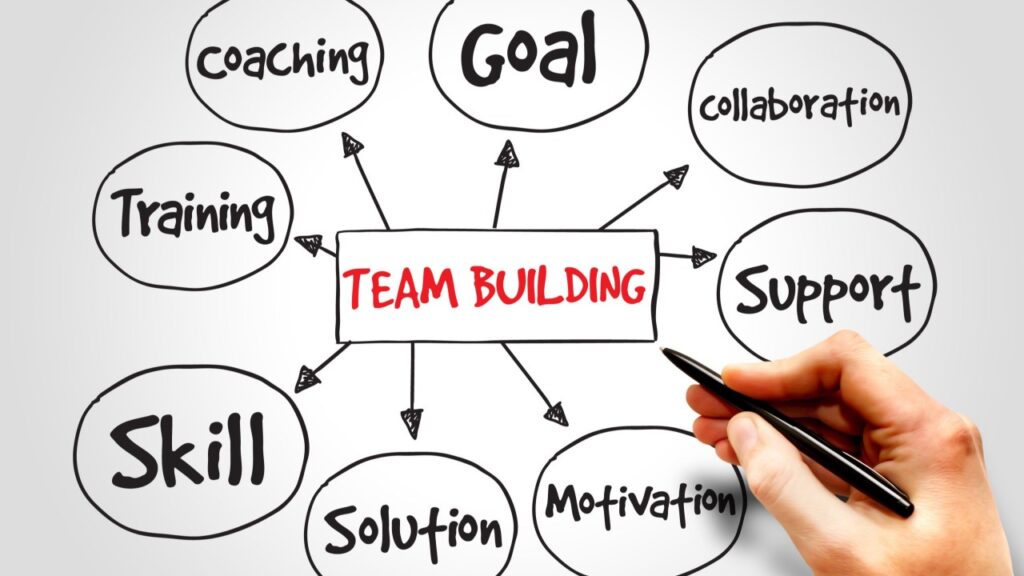
Team building is often misunderstood as a day away from the office, a set of outdoor games, or a light social activity to help employees relax. That view is too narrow. Done properly, team building is a practical people-management intervention. It strengthens how employees relate, communicate, solve problems, support one another and reconnect with the organisation’s purpose.
This matters because engagement is no longer a soft issue. Gallup’s 2026 State of the Global Workplace report found that global employee engagement declined to 20% in 2025, its lowest level since 2020, with low engagement linked to major productivity losses worldwide. Gallup defines engagement as employees’ psychological attachment to their work, team and employer.
For leaders, the message is clear: morale cannot be left to chance. A team may have capable individuals, but if trust is low, communication is weak, roles are unclear, and people feel disconnected, performance suffers. Team building creates structured space to address these issues before they show up as poor collaboration, slow execution, internal conflict, disengagement or avoidable turnover.
Call or WhatsApp us on +254 799 137 087 to discuss a customised team building programme designed to boost team morale, strengthen communication, improve collaboration and increase employee engagement.
Table of Contents
ToggleWhy team building matters beyond fun
Strong teams are not created by job descriptions alone. They are built through shared understanding, repeated interaction, clear expectations and trust. Employees need to know not only what they are expected to do, but also how their work connects with others. They need to feel safe enough to contribute ideas, ask for support, admit challenges and challenge weak decisions respectfully.
Research on team effectiveness consistently points to the importance of trust, communication and team context. McKinsey notes that effective teams depend on factors such as trust, communication and understanding the team’s operating context, especially because teams are now a primary unit of organisational performance.
This is where team building becomes useful. A well-designed session gives employees a different setting in which to observe one another, communicate under pressure, solve problems together and reflect on how they work as a team. The real value is not the activity itself. The value is the learning that comes from the activity and how that learning is connected back to daily work.
A poorly designed team building session entertains people for a day. A serious one helps the team confront how it communicates, where coordination breaks down, how decisions are made, how conflict is handled and what behaviours must change.
Team building and employee engagement
Employee engagement grows when people feel connected, supported, recognised and involved in meaningful work. CIPD describes engagement as linked to energy, dedication and absorption in work, and notes that well-managed employees in good quality jobs are more likely to be productive, innovative, healthier and more fulfilled.
Team building contributes to engagement in three practical ways.
First, it creates connection. Employees often work together without truly knowing one another’s strengths, pressures, communication styles or work preferences. Structured interaction helps break down barriers and builds familiarity.
Second, it improves voice. Many employees hold back in formal meetings but open up in facilitated group settings. When team building is designed well, it gives quieter employees room to contribute and helps managers see team dynamics that may not be visible in normal work routines.
Third, it reinforces belonging. People are more committed when they feel they are part of a team, not just a payroll. The American Psychological Association notes that cultivating connection and community in the workplace supports happier, healthier and more productive employees.
Engagement is not created by slogans. It is shaped by the everyday experience of working with others. Team building improves that experience when it is intentional, inclusive and linked to the realities of the organisation.
The role of trust, communication and psychological safety
Trust is one of the strongest foundations of team performance. Without trust, people protect themselves. They avoid difficult conversations, hide mistakes, withhold ideas and shift responsibility. With trust, people are more willing to collaborate honestly, take ownership and support one another through pressure.
Google’s Project Aristotle research on team effectiveness identified key dynamics of effective teams and emphasised the need for teams to discuss behaviours, norms and dynamics openly, supported by leadership and facilitation where needed.
This does not mean team building should become a therapy session. It means the session should create practical learning around real team behaviours. How do we communicate when under pressure? Do we listen before reacting? Do we include everyone in problem-solving? Do we clarify roles before execution? Do we hold each other accountable without blame?
These are the issues that affect performance. A team that communicates clearly, trusts one another and understands how to coordinate work will execute better than a team that only meets formally and avoids real conversations.
Call or WhatsApp us on +254 799 137 087 to discuss a customised team building programme designed to boost team morale, strengthen communication, improve collaboration and increase employee engagement.
What effective team building should achieve
A serious team building programme should have a clear purpose. The objective may be to improve collaboration, rebuild morale after a difficult period, integrate a new team, strengthen leadership alignment, improve communication, support change management or prepare a team for a demanding business cycle.
The design should therefore match the business need. For example, a sales team may need activities that build resilience, accountability and customer focus. A hospital team may need exercises around coordination, service excellence and communication under pressure. A manufacturing or operations team may need problem-solving, safety awareness, process discipline and handover clarity. A management team may need trust, decision quality, ownership and cross-functional execution.
The best team building sessions do four things.
They diagnose team dynamics. They reveal how people behave when solving problems, competing for limited resources, leading under pressure or depending on others.
They create shared experience. Teams remember what they go through together, especially when the activities are practical, energetic and well facilitated.
They translate lessons into work behaviour. The facilitator should help the team connect each activity to real workplace issues such as communication, planning, accountability, customer service, leadership or conflict.
They close with commitments. The session should produce simple agreements on what the team will do differently after the event.
Without this translation, team building remains an event. With it, team building becomes a performance and culture tool.
Why leaders should treat morale as an execution issue
Morale affects how people show up. Low morale reduces initiative, slows communication and weakens ownership. High morale does not mean people are always happy. It means they have enough trust, clarity and energy to keep contributing even when work is demanding.
Gallup’s Q12 research, based on millions of workers and more than 100,000 teams, shows that highly engaged teams outperform less engaged teams on outcomes such as productivity, profitability, customer loyalty, wellbeing, absenteeism, turnover, safety incidents and quality defects.
For executives and HR leaders, this makes team building a practical investment. It is not simply about making employees feel good for a day. It is about strengthening the human conditions that allow execution to happen: trust, clarity, communication, resilience, collaboration and commitment.
Call or WhatsApp us on +254 799 137 087 to discuss a customised team building programme designed to boost team morale, strengthen communication, improve collaboration and increase employee engagement.
Making team building work
Team building works best when it is not random. The organisation should first clarify what it wants to improve. Is the issue morale, communication, departmental silos, leadership behaviour, change fatigue, service culture, accountability or employee connection?
Once the objective is clear, activities can be selected and facilitated around that purpose. A good programme may include energisers, outdoor challenges, structured group tasks, problem-solving simulations, values-based exercises, reflection sessions and team commitments. The activities should be enjoyable, but enjoyment alone should not be the measure of success.
The real test is what happens after the event. Are people communicating better? Are managers more aware of team concerns? Are departments cooperating more easily? Has the team agreed on better ways of working? Has leadership reinforced the lessons?
This is why a post-session review is important. A short debrief with management or HR can capture what emerged, what needs follow-up and what practical actions should be taken to sustain the momentum.
Conclusion
Team building is most valuable when it is treated as part of organisational capability building, not just staff entertainment. Stronger teams communicate better, recover faster from pressure, solve problems more creatively and execute with greater discipline.
In a work environment where engagement, morale and retention are under pressure, leaders need deliberate ways to build connection and trust. Team building provides that opportunity when it is properly designed, professionally facilitated and linked to real workplace behaviour.
Hessons Consulting Group designs and facilitates team building programmes that combine energy, reflection and practical workplace application. The focus is not only on giving employees a good day out, but on helping teams return to work with stronger communication, clearer collaboration and renewed commitment to shared goals.
Contact Us Today! Reach out through 0799 137087 or book a free and personalized consultation here.