Insurance Staff Training and Capacity Building in Kenya
Hessons Consulting Group provides customised insurance staff training and capacity building in Kenya, supporting insurance companies, insurance brokerage firms and other insurance-sector organisations in strengthening employee capabilities, management effectiveness, customer service and organisational development.
Our corporate training programmes address critical workforce competencies, including leadership and management development, insurance sales and distribution, customer relationship management, claims administration, regulatory compliance awareness, financial management, communication and quality management.
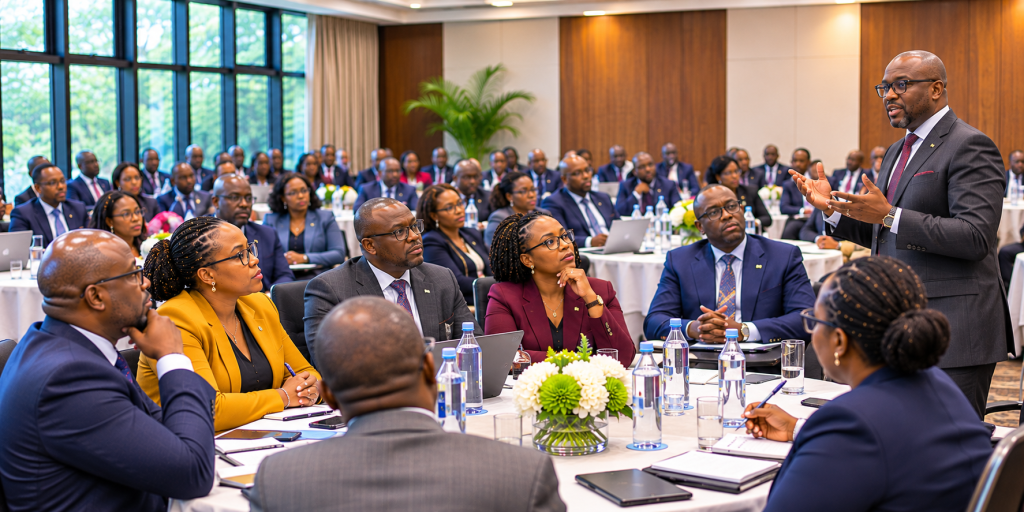
Hessons Consulting Group delivers tailored training for insurance executives, departmental managers, supervisors, sales teams, customer service personnel and other employees, with programmes aligned to institutional priorities and workplace responsibilities.
Table of Contents
ToggleOur Insurance Staff Training Programmes in Kenya
- Insurance Leadership and Management Training: Development of strategic leadership, management accountability, decision-making, employee supervision, delegation, departmental coordination and organisational management capabilities.
- Sales, Marketing and Business Development Training: Training for sales teams, business development personnel and distribution managers covering customer acquisition, consultative selling, ethical sales practices, negotiation, relationship management and commercial effectiveness.
- Customer Service and Policyholder Experience Training: Capacity building on professional customer communication, service responsiveness, policyholder engagement, complaints handling, customer retention and service quality improvement.
- Supervisory Skills and Team Management: Training for departmental managers and supervisors covering employee management, workplace communication, delegation, conflict resolution, team coordination and management accountability.
- Insurance Claims Administration and Customer Communication: Training on administrative coordination, documentation management, customer communication, service turnaround, complaints escalation and professional handling of claims-related enquiries.
- Regulatory Compliance and Market Conduct Awareness: Training on applicable insurance regulatory obligations, ethical business conduct, fair treatment of customers, confidentiality, data protection and anti-money laundering awareness where relevant.
- Financial Management and Business Sustainability Training: Development of budgeting, cost management, financial reporting, resource allocation, commercial awareness and financial decision-making capabilities for managers and relevant employees.
- Communication, Teamwork and Workplace Effectiveness: Training on interpersonal communication, teamwork, emotional intelligence, critical thinking, time management, problem-solving and workplace professionalism.
- Quality Management Systems and Continuous Improvement: Training on quality management principles, applicable ISO 9001 requirements, process documentation, internal auditing, corrective actions and continuous improvement.
- Strategy Execution and Change Management: Training on corporate strategy implementation, departmental objectives, balanced scorecards, management reporting, organisational change and accountability for strategic initiatives.
- Board Training and Corporate Governance: Customised training for insurance boards and governance teams covering strategic oversight, directors’ responsibilities, financial stewardship, risk oversight and board effectiveness.
- Other Customised Insurance Trainings: Tailored to the organisation’s specific needs, staff development priorities and institutional requirements.
Why Insurance Staff Training Must Address Business and Service Delivery Priorities
Insurance businesses depend on employees who can manage customer relationships, communicate policy information accurately, coordinate internal processes and support the organisation’s commercial and regulatory responsibilities.
However, professional experience and familiarity with insurance products do not necessarily establish competence in management, customer communication, sales leadership or organisational coordination.
An insurance company may invest substantially in sales training while continuing to experience weak policy retention, customer complaints or inconsistent business development practices.
Similarly, employees may understand internal procedures but struggle to explain information clearly to customers or coordinate effectively when service issues arise.
A critical distinction is the difference between employees understanding their assigned responsibilities and consistently applying the competencies required to deliver reliable services and support business objectives.
Insurance staff training should therefore be informed by identifiable capability gaps, customer service requirements, management priorities and the organisational conditions affecting employee effectiveness.
The purpose is to strengthen workforce capabilities that contribute meaningfully to service quality, commercial sustainability and institutional accountability.
Strengthening Insurance Sales Effectiveness and Customer Retention
Insurance distribution requires more than acquiring new customers and increasing policy volumes.
Sustainable commercial relationships depend on understanding customer needs, communicating product information responsibly, maintaining professional relationships and delivering consistent service throughout the customer lifecycle.
Sales employees who concentrate exclusively on new business acquisition may give insufficient attention to customer suitability, renewal opportunities and the quality of long-term relationships.
Similarly, weak coordination between sales, policy administration and customer service functions can undermine client confidence and create avoidable retention challenges.
Effective insurance sales training should therefore strengthen consultative selling, professional communication, negotiation, ethical business development and customer relationship management.
For insurance brokerage firms, particular attention should be given to corporate client management, renewal coordination, business development and the professional handling of customer requirements.
Sales effectiveness must be assessed not only through business acquired, but also through the quality, sustainability and responsible management of customer relationships.
Training should support these commercial priorities while reinforcing applicable market conduct and customer protection obligations.
Improving Policyholder Service and Claims Communication
Customer confidence in insurance providers is strongly influenced by how organisations respond to enquiries, communicate decisions and manage service-related concerns.
Policy administration, renewal communication, claims enquiries and complaints handling require employees to provide accurate information and coordinate responsibilities across departments.
Delays, conflicting explanations and unclear communication can create dissatisfaction even where the underlying administrative processes are being handled appropriately.
Insurance staff training should therefore strengthen employees’ ability to communicate professionally, manage customer expectations, maintain accurate records and escalate unresolved matters through established procedures.
Claims-related training for administrative and customer service personnel should particularly address communication, documentation, coordination and service responsiveness.
Technical claims assessment and settlement decisions must remain the responsibility of appropriately competent and authorised insurance personnel.
The objective is to develop customer-facing teams capable of maintaining service consistency, communicating responsibly and supporting fair treatment of policyholders.
Developing Insurance Managers and Strengthening Compliance Awareness
Insurance managers must balance commercial objectives with employee supervision, operational accountability, customer service responsibilities and applicable regulatory requirements.
These responsibilities demand leadership capabilities extending beyond technical knowledge of insurance products and administrative procedures.
Managers should be equipped to establish departmental priorities, supervise employees, evaluate service quality, address operational problems and maintain appropriate management controls.
Compliance awareness is equally important.
Employees involved in customer onboarding, sales, policy administration and customer information management must understand the responsibilities applicable to their functions.
Training should reinforce ethical conduct, fair treatment of customers, confidentiality, internal reporting procedures and the appropriate escalation of compliance concerns.
For organisations subject to relevant anti-money laundering and counter-terrorism financing obligations, training can also strengthen awareness of customer due diligence, suspicious activity indicators and internal compliance procedures.
Management development and compliance awareness should complement each other by establishing clear responsibilities and supporting consistent application of institutional policies.
Connecting Insurance Staff Training to Organisational Improvement
Insurance training programmes should respond to defined business and institutional needs rather than operate as isolated employee development activities.
An organisation seeking to improve customer retention may require stronger relationship management, supervisory capabilities and customer communication.
An insurer addressing administrative delays may need employee training alongside improvements in internal coordination, documentation and management procedures.
Similarly, an institution implementing a new corporate strategy may require management development, change management and stronger departmental accountability.
Training priorities should therefore be established with reference to the responsibilities employees perform, the capabilities they require and the improvements the organisation intends to achieve.
Where appropriate, learning outcomes can be assessed through practical exercises, participant evaluations, management feedback and the application of acquired skills in the workplace.
This provides a clearer basis for connecting workforce development investment with institutional priorities.
Customised Insurance Staff Training and Delivery Options
Hessons Consulting Group provides customised training for general insurance companies, life insurance companies, insurance brokerage firms and other insurance-sector organisations across Kenya.
Programmes are tailored to the institution’s business model, employee responsibilities, management priorities and identified workforce development requirements.
Training is available through in-house training, physical (in-person) training, virtual training and blended learning, with delivery arrangements adapted to the organisation’s operational needs and employee schedules.
Depending on the engagement, programmes may incorporate practical exercises, facilitated management discussions, customer service scenarios and workplace applications.
Our programmes focus on management, business development, organisational effectiveness and relevant compliance awareness rather than regulated technical insurance qualifications or professional certification.
Insurance organisations seeking wider institutional support can also explore our insurance management consulting services, while those considering broader workforce development can review our corporate training programmes in Kenya.
Engage Insurance Staff Training Consultants in Kenya
Engage Hessons Consulting Group for customised insurance staff training, leadership development, sales effectiveness, customer service, claims administration support, compliance awareness, financial management, corporate governance and organisational capacity building.
To discuss your organisation’s training requirements or request a customised training quotation, call or WhatsApp 0799 137 087 or email [email protected].