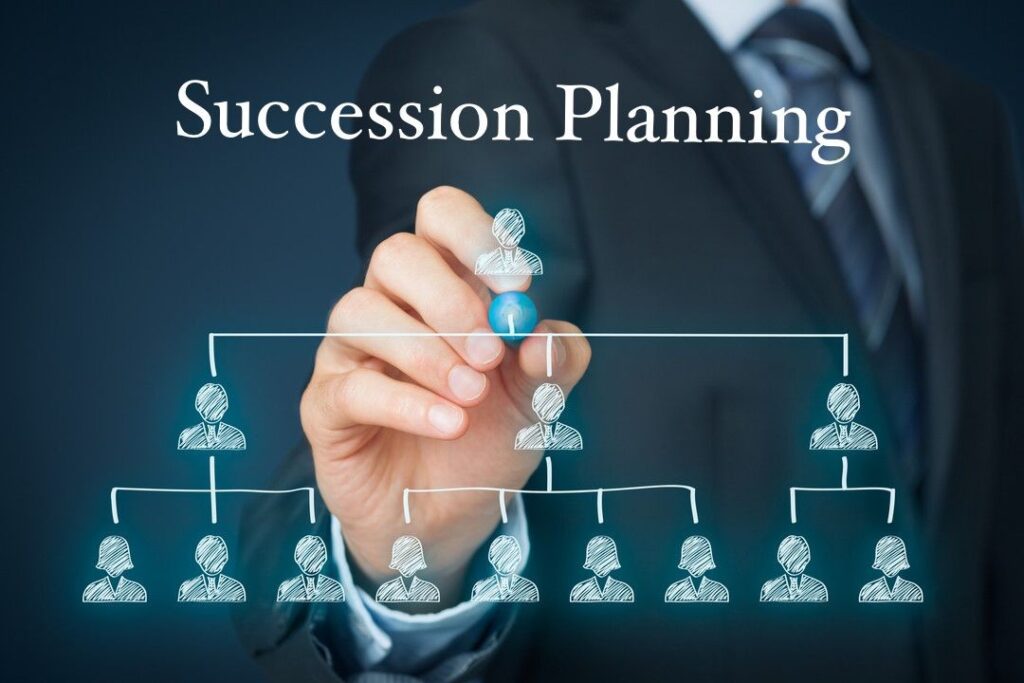
Succession Planning in Kenya – The Practical Playbook for Leadership Continuity and Business Resilience
Every organization is one leadership exit away from a continuity shock. It might be a founder stepping back, a CFO moving to a competitor, a plant manager retiring, or a key technical specialist leaving with years of institutional knowledge. When decision-making, customer relationships, approvals, and operational know-how sit with a few individuals, change becomes disruptive, costly, and sometimes existential.
Succession planning is the discipline of reducing that transition risk. It prepares the organization to absorb inevitable departures without panic hiring, strategic drift, stalled approvals, or loss of stakeholder confidence. Done properly, succession planning is not an HR formality. It is a business resilience system that connects strategy to talent, governance to performance, and leadership transitions to continuity.
In Kenya, the case is even stronger. Many firms are founder-led or heavily dependent on a small leadership core. Fast growth can outpace capability building. Specialized talent is scarce in certain roles. Family businesses often wrestle with governance and role clarity when generational transition approaches. Meanwhile, regulated sectors face increasing expectations around continuity, accountability, and leadership oversight. A succession plan becomes a competitive advantage: stability for customers, confidence for investors, and a clear pathway for talent retention.
This playbook provides a practical succession planning framework tailored to Kenyan operating realities, whether you are running an SME, a large enterprise, a nonprofit, or a family-owned group with multiple businesses. It is designed to help leaders move from good intentions to an executable succession planning process with measurable outcomes.
Call or WhatsApp us on +254 799 137 087 to discuss how to assess leadership continuity risk, identify critical roles, and design a practical succession planning framework that strengthens governance, protects business continuity, and supports long term resilience.
Table of Contents
ToggleWhat Succession Planning Really Means
Succession planning is the structured process of identifying the roles that matter most to business continuity, preparing a pipeline of capable successors, and designing the transition mechanics that protect performance during leadership changes.
It includes three essential dimensions.
Continuity coverage
Who steps in if someone leaves suddenly, and how does the organization keep operating without delays or confusion?
Capability development
Who is being prepared to take on bigger roles, and what experiences and development will make them ready?
Governance and discipline
How is the plan reviewed, updated, and managed with accountability so it does not become a document that sits unused?
Succession planning is not about picking a favourite rising star and declaring them the next CEO. It is about building organizational depth and reducing dependency on individuals. It also is not limited to top executives. In many organizations, the biggest risk sits in operational roles, technical leadership, compliance roles, finance controls, and customer-facing positions where relationships and institutional memory are hard to replace quickly.
Why Succession Planning Matters for Kenyan Organizations
When a critical leader exits without a plan, the organization typically experiences a predictable set of failures.
The typical failures when a critical leader exits
Decisions slow down because approval routes were informal and tied to one individual.
Operational risk increases because controls were executed through personal knowledge rather than structured routines.
Customer confidence drops when account relationships were personality-driven.
Internal morale falls when high performers see no visible path to growth and start taking external calls.
Costs rise through rushed recruitment, inflated salary offers, and extended onboarding time.
In SMEs, the effects are often amplified. A small firm may have only one person who understands cashflow forecasting, procurement approvals, vendor pricing logic, key customer history, or regulatory interactions. Losing that person can set the business back months. In larger firms, gaps can be masked temporarily but still cause strategic drift, political competition, and performance inconsistency.
How succession planning protects execution, retention, and governance
Succession planning protects the organization in three ways.
It strengthens execution because roles are clarified, leadership expectations become explicit, and development becomes intentional.
It improves retention because high potential talent sees a credible future and receives investment, stretch exposure, and mentorship.
It improves governance because boards and executive teams gain visibility into leadership risk, bench strength, and readiness, rather than being surprised during a crisis.
Succession Planning Across Industries in Kenya
Succession planning is relevant across sectors, but the critical roles and risk profile differ.
Financial services and insurance
Continuity is tied to risk governance, credit oversight, regulatory expectations, and strong control environments. Succession planning must include emergency coverage, clear decision rights, and documented control routines.
Manufacturing and FMCG
Operational continuity depends on plant leadership, quality assurance, procurement, maintenance planning, and supply chain execution. The most damaging departures are often operational managers and technical specialists, not only senior executives.
Technology
Continuity risk sits in architecture leadership, product decision-making, data ownership, cybersecurity accountability, and customer success leadership. The succession pipeline must move fast and include capability building through projects, product cycles, and leadership exposure.
Healthcare and education
Continuity depends on clinical leadership, operational administrators, and compliance leadership. Knowledge transfer and procedure standardization matter significantly.
NGOs and development programs
Continuity is tied to donor compliance, program governance, stakeholder engagement, monitoring and evaluation leadership, and reporting integrity. Succession planning must protect credibility, funding confidence, and program delivery.
Family businesses
Succession planning must balance family dynamics with enterprise needs. Governance structures, role clarity, and transition rules are central. Without these, succession becomes conflict rather than continuity.
Call or WhatsApp us on +254 799 137 087 to discuss how to assess leadership continuity risk, identify critical roles, and design a practical succession planning framework that strengthens governance, protects business continuity, and supports long term resilience.
A Practical Succession Planning Framework for Kenyan Organizations
A strong succession plan can be built using a disciplined approach that is simple enough to execute yet robust enough to protect performance. The most effective model is built around three pillars: role criticality, readiness, and risk controls.
Role criticality
This is the process of identifying which roles must never fail. Not all leadership roles carry equal risk. A critical role is one where a sudden vacancy would create immediate business disruption, compliance exposure, customer loss, or operational failure.
Role criticality is assessed using questions such as:
If this role is vacant for 60 days, what breaks?
Does this role hold key approvals or decision authority?
Does this role hold unique technical knowledge not documented elsewhere?
Does this role carry essential external relationships that are hard to replicate quickly?
Does this role directly protect cashflow, risk, compliance, or quality?
Many organizations make an early mistake by listing only C-suite roles. In Kenya especially, some of the most critical roles include finance manager or controller roles, procurement leadership, head of sales or key account leadership, operations manager roles, head of IT or cybersecurity accountable roles, compliance roles in regulated sectors, and plant or warehouse management roles in distribution businesses.
The output of this step is a prioritized list of critical roles and the competencies required to perform them well.
Readiness
Readiness is evidence-based. It is not about title, tenure, or popularity. It is the degree to which a potential successor can perform the role with minimal performance loss after transition.
A practical readiness system categorizes candidates into:
Ready now: can step into the role within 0 to 3 months with manageable risk.
Ready soon: can step into the role within 6 to 12 months with targeted development.
Ready later: a longer pipeline of 12 to 24 months, requiring structured exposure.
Not ready: high potential exists but needs foundational development.
Readiness should be assessed across three dimensions.
Capability: leadership competencies, technical skills, decision quality, and execution discipline.
Exposure: experience across functions, complexity, stakeholder management, and strategic context.
Reliability: consistent performance, judgement under pressure, ethics, and alignment with organizational values.
In Kenyan firms, a common issue is over-reliance on informal perception. Strong succession planning replaces perception with structured assessment through performance data, competency assessment, manager input, peer feedback, and demonstrable project outcomes.
Risk controls
Risk controls are what make succession planning real. They translate readiness into continuity.
Emergency succession coverage: who acts immediately if the role becomes vacant unexpectedly? This is not the final successor, but the interim continuity leader with documented authority.
Knowledge transfer: how is institutional knowledge captured, documented, and shared? This includes process documentation, key contacts, vendor history, decision rationale, and control routines.
Development plans: what targeted experiences will make successors ready? This includes rotations, shadowing, stretch assignments, leading cross-functional initiatives, and formal leadership development.
Retention and motivation: how does the organization keep high potential talent engaged and reduce flight risk? This includes recognition, exposure, meaningful work, and development investment.
Governance cadence: how often is the plan reviewed, updated, and managed? Succession planning becomes credible when it is reviewed like a business metric.
This framework ensures succession planning is proactive, evidence-driven, and governed.
Step-by-Step Succession Planning Process
Succession planning becomes executable when you run it as a repeatable operating rhythm, not a one-off document exercise.
Step 1: Anchor the succession plan to business strategy
Succession planning fails when treated as a generic talent exercise. The plan must be linked to strategic direction over the next 24 to 36 months.
If the strategy includes expansion into new counties, export growth, or a new product line, leadership requirements will change.
If digital transformation and data-driven decision-making are priorities, leadership must include analytics literacy, governance capability, and disciplined execution.
If the organization is integrating acquisitions or consolidating operations, leadership must include change management strength.
Start by clarifying strategic priorities, growth constraints, key risks, and the operating model required to win. Only then define the leadership pipeline needed to support that strategy.
Step 2: Build the critical roles map
List the roles that carry continuity risk and categorize them based on impact.
Enterprise leadership: CEO, COO, CFO, Executive Director, Managing Director roles.
Financial control and cashflow protection: finance manager, controller, credit manager, treasury roles.
Revenue continuity: head of sales, key account leadership, customer success leadership.
Operations and delivery: plant leadership, operations manager, supply chain leadership, quality assurance leadership.
Risk and compliance: compliance officer, risk manager, regulatory liaison roles.
Technology and data: head of IT, cybersecurity accountable roles, data governance leadership.
Specialist roles: roles with rare knowledge, complex technical capability, or unique stakeholder relationships.
For each critical role, define the outcomes expected, key decisions held, and the competencies required.
Step 3: Define readiness criteria
Readiness becomes measurable when criteria are explicit. Avoid vague language like strong leader or good communication. Define the specific capabilities required.
For a CFO role, readiness criteria might include financial discipline, governance, scenario planning, cashflow forecasting, control environment strengthening, board reporting capability, and ethical judgement.
For a head of operations role, criteria might include operational planning, process discipline, quality control, safety culture, supplier management, cost optimization, and team leadership.
For a head of sales role, criteria might include pipeline discipline, key account strategy, distribution management, pricing and margin management, sales coaching, and cross-functional collaboration.
The goal is to reduce bias and ensure succession decisions are defensible.
Step 4: Identify successor pools, not single names
A mature succession plan avoids naming one person per role. It creates a bench.
For each critical role, identify a pool of potential successors across readiness categories. This reduces over-dependence and creates healthy talent development.
In Kenya, many firms lose high potential staff because visibility is limited. A succession plan becomes a talent magnet when paired with development and exposure.
Step 5: Create development pathways that build real capability
Development is not a training calendar. It is structured exposure to complexity.
The strongest development plans include:
Stretch assignments tied to business priorities, such as leading a cost optimization initiative, rolling out a new sales process, implementing a controls framework, or managing a cross-county expansion.
Cross-functional exposure. Finance leaders should understand operations and commercial drivers. Operations leaders should understand cost drivers and cashflow dynamics. Sales leaders should understand delivery and customer experience.
Shadowing and transition exposure. Successors should attend key meetings, board reporting sessions, vendor negotiations, and major customer engagements to learn context and decision logic.
Coaching and mentorship. Pair successors with senior leaders who can guide decision quality, stakeholder handling, and leadership presence.
Formal learning only when it serves the pathway. Training adds value when linked to application and measurable improvement.
Step 6: Design knowledge transfer as a system
Knowledge transfer is where many Kenyan organizations lose value. A leader exits and years of how things work disappears.
Make knowledge transfer practical.
Document critical processes and controls, not everything.
Create role playbooks that include recurring decisions, approval routes, key reports, control routines, and stakeholder maps.
Capture key vendor and customer history with pricing logic, performance expectations, and relationship notes.
Standardize how information is stored so successors can find it, use it, and update it.
Introduce handover checklists and transition calendars defining what must be transferred before exit, during overlap, and after handover.
Step 7: Establish emergency succession coverage
Emergency succession is risk management, not a nice-to-have.
For each critical role, define an interim coverage plan.
Who can sign approvals?
Who can handle stakeholders?
Who can manage critical meetings?
Which decisions require escalation to the board or executive committee?
Emergency succession protects continuity during sudden exits and reduces operational exposure.
Step 8: Govern succession planning like a business priority
Succession planning works when it becomes a standing leadership agenda item.
Boards should review CEO and executive succession with discipline, especially in regulated sectors and high-risk organizations.
Executive teams should review critical roles and bench strength on a quarterly cadence.
HR should support with analytics, development tracking, and plan updates, but leadership must own the plan.
A practical governance rhythm includes:
Quarterly review of critical roles, readiness changes, and development progress.
Annual recalibration based on strategy shifts, role changes, and talent movement.
Periodic review of retention risk for high potential staff.
Integrating succession planning into performance reviews and leadership development decisions.
Call or WhatsApp us on +254 799 137 087 to discuss how to assess leadership continuity risk, identify critical roles, and design a practical succession planning framework that strengthens governance, protects business continuity, and supports long term resilience.
Common Reasons Succession Planning Fails in Kenyan Organizations
Succession planning fails for predictable reasons. Naming them early helps organizations avoid them.
Treating succession planning as a document instead of a system
Some firms produce a succession chart and file it away. Without governance cadence, development pathways, and emergency coverage, it does not protect continuity.
Focusing only on top executives
The biggest continuity risk often sits below the executive tier, especially where technical knowledge and operational decision-making are concentrated.
Choosing successors based on tenure rather than readiness
Tenure matters, but readiness is about capability, exposure, and judgement. Promoting by tenure without development creates performance decline.
Keeping the process too secretive
Confidentiality matters, but complete secrecy creates disengagement. High potential staff need development and feedback, even if they are not promised roles.
Failing to build role clarity and decision rights
If roles are ambiguous, transition becomes chaotic. Succession planning must include clarity of decision authority, approval routes, and operating rhythms.
Ignoring knowledge transfer
A new leader can be capable but still fail without context, relationships, and operating routines.
Not addressing retention risk
Succession plans can backfire if high potential staff are developed but not retained. Pair succession planning with engagement, recognition, and meaningful growth.
Succession Planning for Family Businesses in Kenya
Family enterprises are a major engine of Kenya’s economy. Succession planning in these businesses carries additional complexity because leadership is intertwined with identity, inheritance expectations, and family relationships.
In many family businesses, the founder becomes the central decision-maker for finance, commercial relationships, and operational approvals. Over time, the business becomes dependent on the founder’s presence. When transition approaches, the absence of role clarity and governance rules can trigger conflict and fragmentation.
What makes family business succession uniquely complex in Kenya
Leadership decisions often blur ownership, management, and family expectations.
Successor selection can become emotional rather than capability-based.
Unclear governance invites disputes, faction-building, and instability.
Practical governance and transition mechanisms that work
Effective family business succession planning includes:
Separating ownership and management decisions with clear governance structures.
Defining leadership roles based on competence and performance, not family position.
Establishing transition rules and timelines early, while the founder is still active.
Creating a leadership development pathway for next generation leaders, including external exposure where appropriate.
Building an advisory board or formal board structure with independent voices to support continuity.
Creating written policies around family employment, remuneration, role entry requirements, and conflict resolution.
The goal is to protect family harmony and business performance simultaneously. A disciplined succession plan makes transition predictable rather than emotional.
Succession Planning for SMEs in Kenya
SMEs often assume succession planning is for large corporations. In reality, SMEs carry higher person-dependency risk.
The SME minimum effective succession plan
A practical SME succession plan does not need complexity. It needs clarity and execution.
Identify the top five roles that would disrupt the business if vacant.
Define interim coverage for each role.
Cross-train at least one backup for critical routines, approvals, and customer relationships.
Create simple role playbooks for critical roles.
Build development for two to three high potential staff through stretch assignments and exposure.
Review the plan twice a year.
A simple cadence to keep it alive
For SMEs, the focus is reducing dependency and ensuring continuity in cashflow protection, customer delivery, and operational execution. A twice-a-year review rhythm is often enough to keep the system current without bureaucracy.
Succession Planning for NGOs and Development Programs in Kenya
For NGOs and donor-funded programs, leadership continuity is linked to trust, compliance, and program credibility.
Continuity areas that protect donor confidence and program delivery
Succession planning must protect continuity in:
Donor compliance and reporting quality
Program governance and stakeholder relationships
Monitoring and evaluation leadership
Financial management and controls
Communication and external representation
Practical handover and delegation controls
The plan should include emergency coverage, clear delegation of authority, documented program processes, and a disciplined handover approach. This protects donor confidence and ensures program objectives are delivered even during leadership transitions.
Call or WhatsApp us on +254 799 137 087 to discuss how to assess leadership continuity risk, identify critical roles, and design a practical succession planning framework that strengthens governance, protects business continuity, and supports long term resilience.
Metrics That Prove Succession Planning Is Working
Succession planning becomes real when tracked through measurable indicators. Choose metrics that reflect continuity, capability, and retention.
Continuity metrics
Internal fill rate for critical roles: how many critical roles are filled internally versus externally?
Transition incident rate: during leadership changes, did the organization experience major disruptions, compliance gaps, customer losses, or operational delays?
Capability and readiness metrics
Bench strength coverage: how many critical roles have at least one ready now successor and one ready soon candidate?
Time to productivity for promoted leaders: how quickly do successors stabilize performance?
Leadership development completion: are successors completing planned exposure, stretch assignments, and capability building?
Retention and risk metrics
High potential retention rate: are high potential employees staying and growing?
Retention risk tracking: are the most critical successors showing flight risk signals that require action?
These metrics give executive teams and boards visibility into leadership risk and organizational depth.
Implementation Roadmap: How to Launch a Succession Planning Program in 90 Days
A succession planning program does not require years to start. What matters is disciplined execution.
Days 1–15: Align and map risks
Confirm strategy priorities and continuity risks.
Identify critical roles and define outcomes and key decisions for each.
Agree on governance cadence and ownership.
Days 16–35: Define readiness and identify successor pools
Create readiness criteria for critical roles.
Assess potential successors and categorize readiness.
Define emergency coverage for each critical role.
Days 36–60: Build development and knowledge transfer systems
Create development pathways tied to real business projects.
Design role playbooks and handover checklists.
Establish mentorship and exposure routines.
Days 61–90: Operationalize and govern
Create a simple succession dashboard showing critical roles and readiness coverage.
Schedule quarterly reviews.
Integrate succession planning into performance and leadership development discussions.
Communicate the intent and pathways appropriately to sustain engagement and retention.
This approach builds a living system rather than a one-time exercise.
How Hessons Supports Succession Planning in Kenya
Many organizations understand the concept of succession planning but struggle to make it executable. The challenge is not the idea. The challenge is creating a system that fits the operating model, culture, and growth realities of the organization.
Typical engagement components
Hessons Consulting Group supports organizations in Kenya to design and operationalize succession planning frameworks that are practical, governance-ready, and aligned to strategy. This typically includes critical role mapping, readiness criteria and assessment tools, leadership development pathways, emergency succession protocols, and knowledge transfer systems that protect operational continuity without creating bureaucracy.
What practical and governance-ready looks like in delivery
A strong succession system is lightweight enough to run quarterly, clear enough to guide real promotion decisions, and disciplined enough to withstand leadership exits without disruption. It is designed to be used, updated, and owned by leadership rather than parked with HR as a compliance artifact.
Conclusion
Leadership transitions are inevitable. Crisis is optional.
Succession planning turns uncertainty into preparedness. It protects continuity, strengthens capability, improves retention, and reduces the hidden costs of disruption. For Kenyan organizations navigating growth, competition, and evolving governance expectations, a disciplined succession planning process is not a luxury. It is a core leadership responsibility.
Organizations that do succession planning well do not merely replace leaders. They build leadership depth. They create predictable handovers. They protect customer confidence. They retain talent by offering real development and credible pathways. They reduce dependency on individuals and build resilience into how the organization operates.
If your organization is founder-dependent, experiencing growth, preparing for retirements, or operating in a sector where continuity and governance matter, succession planning should be addressed now while you still have time to prepare, develop, and transfer knowledge deliberately.
For a structured succession planning blueprint, leadership readiness tools, and a practical implementation roadmap tailored to your organization Contact Us Today! Reach out through 0799 137087 or book a free and personalized consultation here.