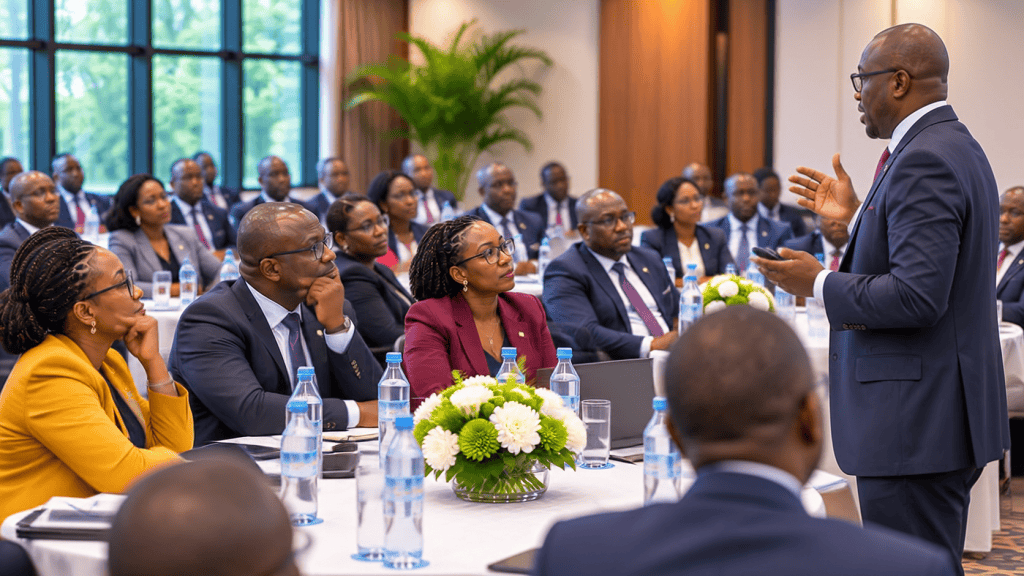
Retail and Distribution Staff Training in Kenya
Hessons Consulting Group provides customised retail and distribution staff training in Kenya, supporting supermarkets, retail chains, wholesalers, FMCG distributors, consumer goods companies and multi-branch businesses in strengthening workforce capabilities, sales effectiveness, management accountability and operational efficiency.
Our corporate training programmes address critical workforce competencies, including leadership and supervision, sales and business development, customer service, inventory management, merchandising, financial management, communication and organisational effectiveness.
Hessons Consulting Group delivers tailored training for executives, branch managers, sales teams, distribution supervisors, warehouse personnel, customer service teams and other employees, with programmes aligned to commercial priorities and workplace responsibilities.
Table of Contents
ToggleOur Retail and Distribution Staff Training Programmes in Kenya
- Leadership and Management Development: Training for executives, branch managers and departmental heads covering strategic leadership, decision-making, employee management, delegation, resource allocation and management accountability.
- Sales, Marketing and Business Development Training: Development of consultative selling, customer acquisition, sales negotiation, territory management, business development, sales execution and customer retention capabilities.
- Retail Store and Branch Management Training: Training for store managers, branch supervisors and team leaders covering daily operations, staff supervision, service standards, stock accountability, branch coordination and management reporting.
- Customer Service and Customer Experience Training: Capacity building in professional customer engagement, service responsiveness, complaints handling, customer relationship management and service quality improvement.
- Distribution and Field Sales Management Training: Training on sales territory planning, customer coverage, route-to-market execution, field team supervision, distributor relationships and sales reporting.
- Inventory and Stock Management Training: Development of stock control, inventory monitoring, replenishment coordination, stock reconciliation, loss prevention awareness and inventory accountability capabilities.
- Merchandising and Retail Sales Effectiveness: Training on product presentation, promotional execution, in-store customer engagement, product knowledge and merchandising coordination.
- Financial Management and Cost Control Training: Capacity building in budgeting, operating cost awareness, gross margin interpretation, expenditure monitoring, working capital management and financial decision-making.
- Procurement, Warehousing and Supply Chain Coordination: Training on procurement planning, supplier coordination, warehouse administration, order fulfilment, stock documentation and internal operational communication.
- Communication, Teamwork and Workplace Effectiveness: Development of professional communication, teamwork, emotional intelligence, problem-solving, time management, conflict resolution and workplace accountability.
- Quality Management Systems and Continuous Improvement: Training on quality management principles, applicable ISO 9001 requirements, process documentation, internal auditing, corrective actions and operational improvement.
- Strategy Execution and Performance Management: Training on corporate strategy implementation, departmental objectives, sales performance management, balanced scorecards, management reporting and accountability for business results.
- Other Customised Retail and Distribution Trainings: Tailored to the organisation’s specific needs, staff development priorities and operational requirements.
Why Retail and Distribution Staff Training Must Address Commercial Results
Retail and distribution businesses depend on employees whose daily decisions influence sales, customer relationships, inventory availability, operating costs and service delivery.
However, increasing the number of trained employees does not necessarily lead to stronger commercial results.
A retailer may invest in sales training while continuing to experience inconsistent customer service, weak stock replenishment practices or inadequate branch supervision.
Similarly, a distributor may have experienced sales representatives but struggle to maintain effective customer coverage, manage sales territories or coordinate field activities with inventory and delivery operations.
These challenges demonstrate an important distinction between individual employee competence and the collective capabilities required to execute the organisation’s commercial strategy.
Training should therefore be informed by the responsibilities employees perform, the challenges affecting business operations and the capabilities required to improve results.
For retail businesses, priorities may include store management, customer service, merchandising and stock accountability. For distributors, greater emphasis may be required on field sales management, customer coverage, commercial relationships and operational coordination.
Effective training recognises these differences rather than applying identical programmes across businesses with distinct operating models.
Strengthening Sales Execution and Customer Relationship Management
Sales teams play a central role in converting commercial opportunities into sustainable business relationships.
However, meeting short-term sales targets does not necessarily indicate that employees are developing profitable customer accounts or supporting the organisation’s long-term commercial interests.
Weak sales planning, inadequate customer follow-up, inconsistent territory coverage and limited understanding of product margins can undermine business development efforts.
Retail and distribution sales training should strengthen employees’ ability to identify opportunities, understand customer requirements, negotiate responsibly and manage relationships beyond the initial transaction.
For distributors, particular attention should be given to field sales supervision, key account management, territory planning and coordination between sales commitments and product availability.
For retailers, emphasis should extend to customer engagement, merchandising, product knowledge and the quality of service provided across different outlets.
Effective sales capability combines customer acquisition with disciplined commercial execution, relationship management and an understanding of business profitability.
Organisations seeking more focused commercial development can also explore Hessons’ corporate sales training programmes in Kenya.
Developing Effective Branch Managers and Distribution Supervisors
Branch managers, store supervisors and field sales managers are responsible for translating business objectives into consistent operational practices.
Their decisions influence employee productivity, customer service, stock accountability, expenditure control and the achievement of commercial targets.
However, employees promoted into supervisory positions may have strong sales or operational experience without the management capabilities required to lead teams effectively.
Weak delegation, inconsistent communication and inadequate supervision can affect both employee effectiveness and business results.
Management training should therefore strengthen leadership judgement, work planning, team coordination, performance discussions and accountability for assigned responsibilities.
For multi-branch businesses, effective supervision is also essential to maintaining consistent operating standards while responding to differences in local market conditions.
The objective is to develop managers who can maintain operational discipline, guide employees effectively and connect departmental activities with wider business priorities.
Strengthening Inventory Accountability and Operational Coordination
Inventory management is a significant responsibility for retail and distribution businesses because stock represents financial resources committed to future sales.
Inaccurate records, weak replenishment coordination, inadequate stock handling and inconsistent documentation can contribute to avoidable losses and service disruptions.
These challenges are not always attributable to inadequate systems. They may arise from unclear responsibilities, insufficient employee understanding or inconsistent application of established procedures.
Employees involved in procurement, receiving, warehousing, stock control and sales must understand how their responsibilities interact.
Training should reinforce accurate documentation, stock accountability, appropriate escalation of discrepancies and effective communication between departments.
Managers also require sufficient understanding of inventory turnover, stockholding costs and working capital implications to make informed operational decisions.
The purpose is to strengthen employee capabilities that support stock availability, reliable records, cost control and consistent order fulfilment.
Connecting Staff Training to Business Growth and Organisational Improvement
Retail and distribution companies frequently undertake initiatives involving branch expansion, distribution network development, product diversification and improvements in customer service.
Successful implementation requires employees and managers who possess the capabilities necessary to support these changes.
A company expanding its distribution network may require stronger field supervision, sales management and customer relationship capabilities.
A retailer opening additional branches may need to strengthen store management, inventory accountability, employee supervision and service consistency.
Training priorities should therefore be connected to the organisation’s growth plans, operational requirements and identified workforce development needs.
Where appropriate, training effectiveness can be assessed through practical exercises, participant feedback, management observations and the application of acquired skills in the workplace.
This provides leadership with a clearer basis for evaluating whether workforce development is supporting the organisation’s commercial and operational objectives.
Customised Retail and Distribution Staff Training and Delivery Options
Hessons Consulting Group provides customised staff training for supermarkets, retail chains, wholesalers, FMCG distributors, consumer goods companies, specialised retailers and multi-branch trading businesses across Kenya.
Training programmes are tailored to identified employee competency gaps, departmental responsibilities, management priorities and intended learning outcomes.
Delivery options include in-house training, physical (in-person) training, virtual training and blended learning, with arrangements adapted to the organisation’s operating schedules and workforce requirements.
Programmes may incorporate practical exercises, retail and distribution scenarios, management discussions and workplace applications relevant to participating employees.
Organisations seeking broader institutional support can also explore our retail and distribution management consulting services and corporate training programmes in Kenya.
Engage Retail and Distribution Staff Training Consultants in Kenya
Engage Hessons Consulting Group for customised retail and distribution staff training, sales and marketing development, leadership training, branch management, field sales supervision, customer service, inventory management, operational effectiveness and organisational capacity building.
To discuss your company’s training requirements or request a customised training quotation, call or WhatsApp 0799 137 087 or email [email protected].