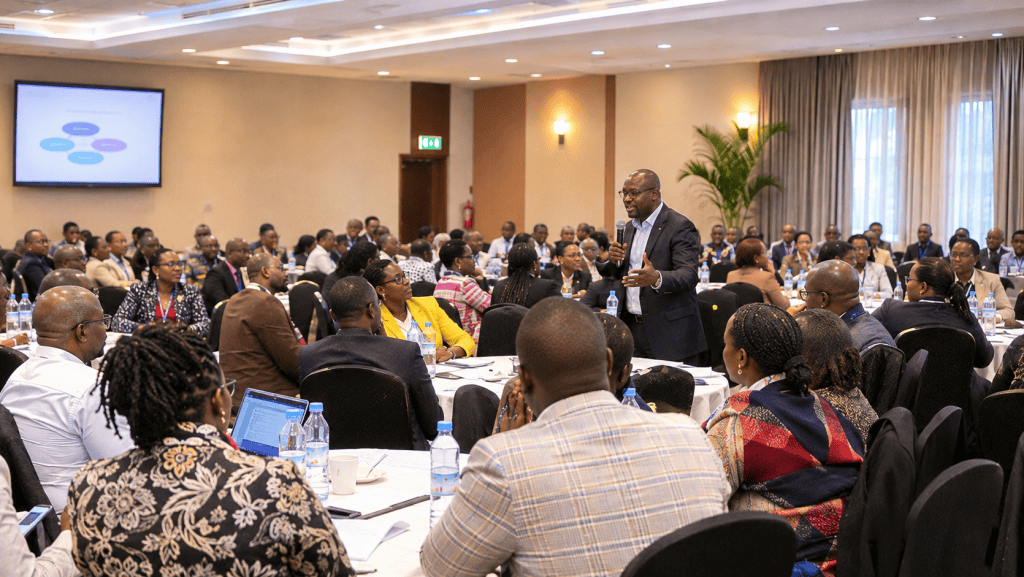
Agribusiness Sales Training in Kenya
Hessons Consulting Group provides customised agribusiness sales training in Kenya, supporting agricultural input suppliers, seed companies, animal feed manufacturers, agricultural equipment businesses, agro-dealers and agribusiness distributors in strengthening sales capabilities, market development and commercial effectiveness.
Our training equips agribusiness sales representatives, field sales teams, business development professionals, account managers and sales leaders with practical skills to acquire customers, communicate product value, manage territories, negotiate effectively and develop sustainable business relationships.
Table of Contents
ToggleKey Areas of Our Agribusiness Sales Training
Hessons Consulting Group delivers a customised agribusiness sales training programme aligned with the organisation’s products, customer segments, distribution channels and commercial priorities.
Key areas may include:
- Sales Mindset, Time Management and Productivity: Developing a business-oriented mindset, commercial awareness, personal accountability, effective time management and disciplined sales execution.
- Prospecting and Consultative Selling: Identifying prospective customers, qualifying opportunities, understanding customer needs and developing new business relationships.
- Value-Based Selling and Objection Handling: Communicating product value, addressing customer concerns, differentiating offerings and managing competitive pricing objections.
- Sales Negotiation and Closing Techniques: Strengthening persuasive communication, commercial negotiation, opportunity management and the ability to secure customer commitments.
- Territory Management, Customer Relationships and Sales Leadership: Improving market coverage, dealer and distributor relationships, customer retention, sales coaching and accountability for commercial results.
- Other Customised Agribusiness Sales Trainings: Tailored to the organisation’s specific sales challenges, commercial priorities and workforce development requirements.
Understanding the Commercial Realities of Agribusiness Sales
Agribusiness sales teams operate in markets where purchasing decisions are influenced by agricultural seasons, customer cash flows, product availability, expected returns and changing market conditions.
A seed company may experience concentrated demand around planting seasons, while an animal feed manufacturer must manage customers whose purchasing requirements depend on livestock production cycles and operating costs.
Agricultural equipment suppliers may encounter longer purchasing decisions involving financing, product suitability, maintenance requirements and the expected economic benefits of an investment.
These differences have important implications for sales planning and customer engagement.
Sales representatives must understand when customers are likely to purchase, what influences their decisions and how to position products within the customer’s commercial circumstances.
Effective training should strengthen the ability to identify viable opportunities, communicate value and maintain relationships throughout the purchasing cycle.
Agribusiness sales effectiveness depends on understanding customer economics and purchasing behaviour, not simply generating orders or increasing field visits.
Strengthening Customer Acquisition and Consultative Selling
Agribusiness companies frequently serve different customer categories, including individual farmers, commercial farms, agro-dealers, cooperatives, distributors and institutional buyers.
Each segment has distinct purchasing considerations.
A commercial farmer evaluating agricultural inputs may prioritise product suitability, availability, cost and expected economic value.
An agro-dealer may be more concerned about customer demand, stock turnover, product margins, supply reliability and the commercial terms offered by suppliers.
An effective sales professional must recognise these differences rather than relying on a uniform sales presentation.
Training should strengthen prospect qualification, customer needs assessment, questioning, active listening and value communication.
Sales representatives should be capable of explaining approved product information accurately, understanding commercial concerns and presenting relevant solutions without making unsupported technical or productivity claims.
The objective is to develop customer-focused sales teams capable of translating market opportunities into commercially meaningful business.
Improving Territory Management and Field Sales Productivity
Territory management is particularly important for agribusinesses with sales teams covering multiple agricultural regions, rural markets and dealer networks.
Field representatives may spend considerable time travelling between customers, conducting product presentations, following up on orders and supporting distributor relationships.
Without effective planning, sales activity can become expensive and commercially unproductive.
A representative may complete numerous customer visits without securing sufficient orders, developing new accounts or strengthening existing relationships.
Training should therefore develop capabilities in customer segmentation, territory planning, route scheduling, account prioritisation and the productive use of selling time.
Sales professionals should also understand how seasonal demand affects the timing of customer engagement and business development activities.
For managers, territory performance should be evaluated through meaningful indicators such as customer acquisition, sales conversion, account development and the commercial results achieved relative to sales effort.
The emphasis should be on effective market coverage and commercially productive customer relationships rather than the volume of field activity alone.
Strengthening Sales Negotiation and Distribution Relationships
Agribusiness sales often involve negotiations concerning pricing, order quantities, payment arrangements, supply reliability and customer expectations.
Price objections may arise from competition, limited purchasing capacity or uncertainty about the commercial value of a product.
Effective salespeople must understand the reasons behind these objections and communicate value without relying unnecessarily on discounts.
For manufacturers and distributors, successful selling also requires productive relationships with agro-dealers, wholesalers and other channel partners.
However, expanding distribution coverage does not automatically guarantee stronger market performance.
A company may recruit additional dealers without achieving corresponding improvements in sales volumes or the movement of products to final customers.
Sales teams must therefore develop the ability to identify commercially viable partners, strengthen existing accounts and support consistent customer engagement.
Training should reinforce negotiation skills, account development, sales pipeline discipline and professional management of commercial commitments.
Developing Effective Agribusiness Sales Leaders
Agribusiness sales managers must coordinate teams operating across different territories, customer segments and purchasing seasons.
Their responsibilities extend beyond setting sales targets and reviewing order volumes.
Effective leadership requires an understanding of territory potential, customer development, sales productivity and the factors influencing team results.
Managers must be able to identify capability gaps, coach representatives, assess account performance and establish clear expectations for commercial execution.
Training should strengthen sales supervision, field coaching, performance reviews and accountability while encouraging commercially sound decision-making.
The objective is to build sales teams that can pursue market opportunities systematically and contribute to sustainable business growth.
Customised Agribusiness Sales Training and Delivery Options
Hessons Consulting Group provides customised sales training for agricultural input companies, seed businesses, animal feed manufacturers, agricultural equipment suppliers, agro-dealer networks, agribusiness distributors and other agricultural enterprises across Kenya.
The programme may cover selected sales competencies or provide comprehensive sales team development, depending on the organisation’s products, target markets, commercial objectives and employee experience.
Training is available through in-house training, physical (in-person) training, virtual training and blended learning, with arrangements adapted to operational requirements and field sales schedules.
Practical activities may include agribusiness sales scenarios, customer engagement simulations, objection-handling exercises, negotiation role-plays, territory planning and account development exercises.
Training focuses on commercial sales capabilities and management effectiveness. Product-specific agronomic, veterinary and other regulated technical guidance remains the responsibility of appropriately qualified professionals.
Organisations seeking broader commercial development can also explore our corporate sales training programmes in Kenya and B2B sales training services.
Engage Agribusiness Sales Training Consultants in Kenya
Engage Hessons Consulting Group for customised agribusiness sales training designed to strengthen customer acquisition, consultative selling, objection handling, commercial negotiation, territory management, sales productivity and sales leadership.
To discuss your organisation’s agribusiness sales training requirements or request a customised training quotation, call or WhatsApp 0799 137 087 or email [email protected].