Customer Retention System: Service Recovery, Complaint Ops, and Loyalty Economics
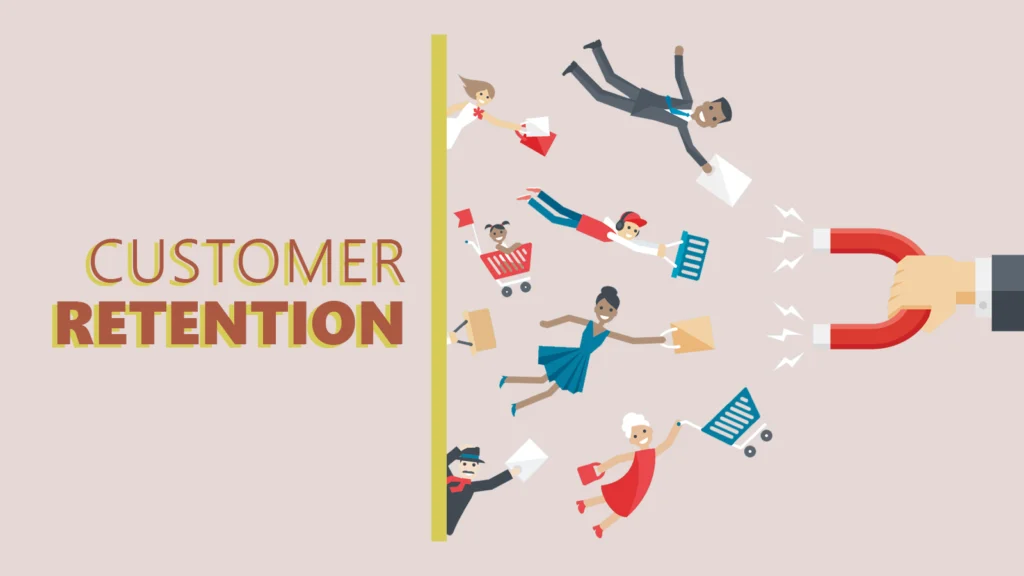
Customer retention is more critical to profitability than many realize. Research shows that a mere 5% increase in customer retention can boost profits by 25% to 95%, since loyal customers tend to buy more, stay longer, and refer others. In fact, acquiring new customers can cost 5 to 25 times more than retaining existing ones. Building a customer retention system—a structured approach to keep customers happy and loyal—has become a strategic imperative. Such a system rests on three pillars: excellent service recovery when things go wrong, strong complaint operations to capture and resolve customer issues, and a deep understanding of loyalty economics to guide investment in keeping customers over the long term.
Call or WhatsApp us on +254 799 137 087 to discuss how to strengthen your customer retention system through effective service recovery, structured complaint operations, loyalty strategy, customer insight driven improvements, and practical implementation approaches that improve satisfaction, reduce churn, and increase customer lifetime value.
Table of Contents
ToggleThe Economics of Customer Retention
Investing in retention yields compounding returns. Long-term customers typically generate higher lifetime value: they spend more over time, require fewer resources to serve, and are less price-sensitive. They also often promote the brand to others, driving referral business. Bain & Company’s research famously illustrated that keeping customers longer dramatically raises profitability—the longer a customer remains, the more overall value they deliver to the company. Conversely, losing a loyal customer means forfeiting all that future value.
Loyalty economics is about quantifying these effects. For example, one study found manufacturers who actively tracked customer retention and set loyalty goals were 60% more profitable than those that didn’t focus on loyalty. Additionally, it costs far more to acquire a new customer than to keep an existing one, and the chance of selling to an existing satisfied customer is dramatically higher than converting a new prospect. The message is clear: retaining customers is a smart investment. Companies should monitor metrics like customer lifetime value (CLV), repeat purchase rates, and churn, and use loyalty data to inform strategy. When you understand the economics of loyalty, it becomes obvious why efforts like service recovery and complaint management pay off.
Service Recovery: Turning Failures into Loyalty
No matter how good your products or services are, problems sometimes occur. Service recovery is the process of making things right when a customer’s experience goes wrong. How a company handles service failures can make or break the customer relationship. A well-known concept called the service recovery paradox suggests that a customer might become even more loyal after a problem is fixed superbly than if nothing had gone wrong at all. For instance, if an airline cancels a flight but then quickly apologizes, rebooks the passenger on a convenient alternative, and perhaps offers a travel voucher, that passenger could end up happier with the airline than if the flight had been on time. The key is that the recovery effort demonstrates the company’s commitment to the customer.
Effective service recovery has several components. First, respond quickly and take ownership of the issue. An immediate apology and acknowledgment of the problem help restore trust. Next, resolve the problem or compensate the customer in a way that genuinely addresses their inconvenience—this could mean re-performing a service, providing a replacement, refunding fees, or offering added value. It’s important that the remedy matches the customer’s level of frustration and the impact of the issue. Third, follow up after the resolution to ensure the customer is satisfied and feels valued. This extra step shows you care about getting it right.
Done correctly, service recovery not only salvages the situation but can increase customer loyalty. Customers remember which companies stood by them during a mishap. A sincere, well-executed recovery can leave a lasting positive impression. On the other hand, poor handling of complaints—being defensive, slow, or ungenerous—will almost certainly drive the customer away. Train your frontline teams on empowerment: give them the authority to provide fixes or token gestures (like a free upgrade or gift) without bureaucratic delays. Ultimately, a culture that views mistakes as opportunities to impress the customer will retain more business. As one classic business quote puts it, “A good recovery can turn angry, frustrated customers into loyal ones. It can, in fact, create more goodwill than if things had gone smoothly in the first place.” It’s far better to proactively win back a customer’s goodwill than to lose that customer forever due to indifference.
Complaint Operations: From Feedback to Retention
While service recovery deals with fixing one-off issues, a related pillar of retention is a robust complaint management process—what we can call “complaint ops.” This refers to the systems and workflows for handling customer complaints and feedback systematically. Every complaint is essentially a signal that something is wrong, and if ignored, it can signal the end of a customer relationship. As one expert notes, each complaint isn’t just a blip of customer dissatisfaction; it’s “a relationship at risk”. Companies that excel at customer retention treat complaints as valuable intelligence, not annoyances.
Effective complaint operations start with making it easy for customers to voice concerns. If unhappy customers have no outlet (or feel it’s pointless), many won’t bother complaining to you—they’ll simply leave for a competitor or vent publicly. Provide multiple channels for feedback: in-person, phone, email, social media, and dedicated complaint portals. Importantly, capture even casual mentions of frustration (in conversation with staff or on surveys) in a central system. It’s been observed that an absence of formal complaints isn’t necessarily a sign of perfect service; it may mean issues are going unreported due to poor complaint capture mechanisms. Encourage your team to log and report any customer grumblings, no matter how minor, so you can see patterns.
Once a complaint is logged, respond swiftly and sincerely. Customers expect timely acknowledgement. For instance, sending an immediate note or message saying “We’ve received your complaint and we’re looking into it” can reassure the customer that they’re heard. Then, investigate and resolve the issue to the customer’s satisfaction, similar to the service recovery steps above. Throughout, keep the customer informed of the progress and timeline—people are more patient when they know their issue is not lost in a void.
Crucially, analyze complaints for root causes and trends. Don’t just fix individual problems—use them to improve. A modern complaint management program will categorize and track complaints (by type, product, branch, etc.) and look for recurring issues. If multiple customers complain about the same pain point, that’s a clear signal to change a process or policy. By treating complaints as “strategic intelligence” rather than mere paperwork, companies can identify friction points and address them proactively. For example, if several customers complain about a confusing billing statement, the company can redesign the bill for clarity, thus preventing future complaints and frustration.
A well-run complaint operation turns unhappy customers into loyal ones by showing that the company listens and learns. In fact, customers tend to be more loyal to brands that respond to and resolve their complaints effectively. Instead of seeing complaints as a headache, view them as a second chance. Every resolved complaint is an opportunity to re-engage a customer and demonstrate your values. Over time, a reputation for responsive complaint resolution can become a competitive advantage—customers know you will take care of them if an issue arises.
Call or WhatsApp us on +254 799 137 087 to discuss how to strengthen your customer retention system through effective service recovery, structured complaint operations, loyalty strategy, customer insight driven improvements, and practical implementation approaches that improve satisfaction, reduce churn, and increase customer lifetime value.
Loyalty Programs and Beyond: Maximizing Lifetime Value
Many companies implement customer loyalty programs as part of their retention system. Reward programs, special perks for repeat customers, and personalized offers can all reinforce loyalty. The idea is to make your best customers feel recognized and appreciated so they have little incentive to switch to a competitor. However, loyalty programs need to be designed carefully—if the benefits are trivial or it’s too hard to redeem rewards, customers won’t find them compelling. The best programs use the data from loyal customers (purchase history, preferences) to tailor rewards that truly matter to those customers’ needs.
Beyond formal programs, consider how to continually add value for existing customers. This could mean providing excellent customer service, offering exclusive content or training, or building a community around your product. Customer retention thrives when customers feel they are getting ongoing value and engagement, not just a transaction. For example, a software company might host free webinars for its subscribers to help them use the product better, or a retailer might offer invite-only sales events to its VIP customers. These efforts deepen the relationship.
Equally important is to measure the outcomes of retention efforts. Track customer retention rate, but also monitor repeat purchase rate, churn rate, Net Promoter Score (NPS), and changes in average CLV. Improvement in these metrics indicates your retention strategies are working. If churn is not decreasing, analyze where there might be gaps—perhaps service recovery isn’t fast enough or your loyalty incentives aren’t attractive.
Additionally, leverage data analytics to be proactive about retention. Modern CRM systems and AI tools can analyze customer behavior for early warning signs of churn – for example, declining usage, reduced purchase frequency, or low satisfaction survey scores. By monitoring these signals, companies can reach out to at-risk customers with targeted interventions (such as a personalized offer, a courtesy call, or an account review) before the customer decides to leave. Many telecom and subscription businesses use predictive models to flag customers likely to cancel, then take steps to win them back or address their issues. This kind of proactive retention strategy can significantly reduce churn by addressing problems early and showing customers that the company cares about keeping their business.
Finally, companies should instill a customer-centric culture across the board. Everyone from front-line employees to managers should understand that keeping current customers happy is as important as, if not more than, winning new ones. Recognize and reward employees who excel at service recovery or receive praise from customers. When staff are empowered and motivated to put customers first, retention tends to improve naturally.
Building a Holistic Customer Retention System
Putting it all together, a customer retention system is an integrated approach combining people, processes, and technology. It might include customer service training programs, a well-defined complaint escalation workflow, customer feedback surveys and analytics, loyalty rewards infrastructure, and a dashboard of retention metrics for leadership. The goal is to proactively manage customer relationships so that issues are minimized, and when they do occur, the company reacts in a way that strengthens the relationship.
It’s also important to customize retention strategies to your business model and customer base. A telecom company in Kenya might focus on network issue resolution and loyalty points (for example, Safaricom’s well-known Bonga Points loyalty program rewards long-term mobile customers), whereas a B2B firm might focus on account managers proactively checking in with clients and addressing service issues before they escalate. In all cases, the principles of responsiveness, personalization, and appreciation apply.
Organizations that have implemented comprehensive retention systems often see tangible results: higher customer lifetime values, more referrals, lower marketing costs, and increased market share driven by positive word-of-mouth. Moreover, investing in retention often boosts employee morale—when employees can resolve customer issues and see happy outcomes, it creates a sense of pride and purpose.
While building such a system can be complex, the payoff is significant. Companies don’t have to do it alone either. Engaging a consulting partner with expertise in customer experience can accelerate the process. Hessons Consulting Group, for example, helps businesses in Kenya and across Africa design customer retention frameworks that encompass effective service recovery processes, robust complaint management systems, and data-driven loyalty strategies. By leveraging such expertise, an organization can establish itself as customer-centric and enjoy the competitive edge of a loyal customer base.
In summary, customer retention is not just a department or a tactic—it’s a company-wide strategy. By treating every service lapse as an opportunity to impress, every complaint as a chance to improve, and every loyal customer as an advocate to reward, firms build resilience and sustainable growth. A strong customer retention system creates a virtuous cycle: happy customers stay and spend more, which in turn fuels business success. In today’s competitive market, that kind of loyalty is priceless.
Contact Us Today! Reach out through 0799 137087 or book a free and personalized consultation here.