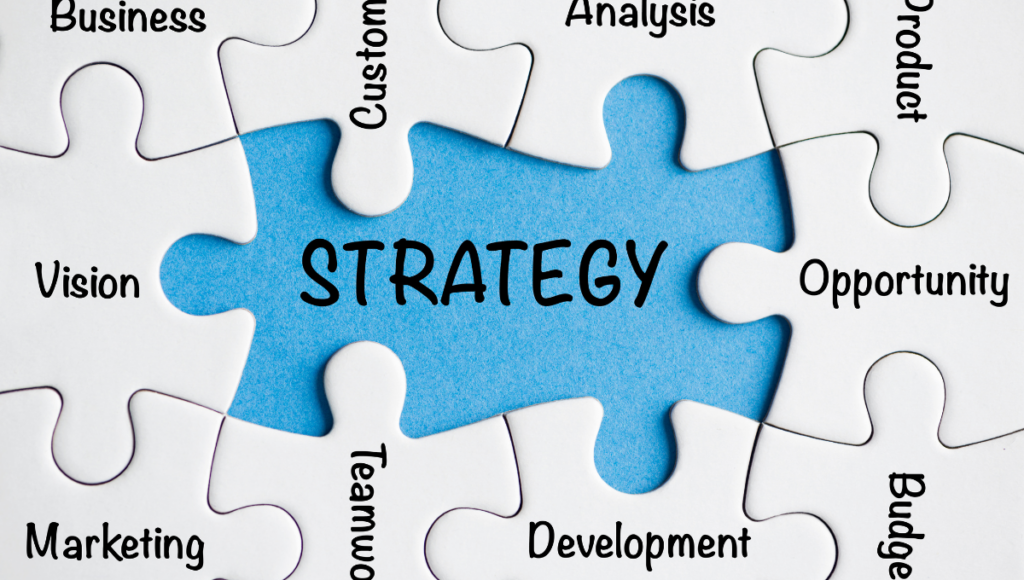
Business Strategy That Works: From Vision to Execution in Complex Organizations
Table of Contents
ToggleWhat Strategy Really Means in Modern Organizations
Strategy is not a document, an annual retreat, or a set of inspirational statements. It is a disciplined series of choices about where an organization will compete, how it intends to win, and what it will deliberately not pursue. Strategy forms the bridge between ambition and outcomes, guiding daily decisions, resource allocation, and performance expectations.
At its core, strategy addresses one fundamental challenge: how to create and sustain value in environments defined by limited resources, competing priorities, and constant disruption. Markets shift, technologies reshape value chains, regulations evolve, and customer expectations rise. Strategy provides coherence amid this complexity by forcing leadership teams to make explicit trade-offs and align around a clear direction.
Strategy as a System, Not a Statement
Modern strategy extends beyond competitive positioning. It integrates purpose, stakeholder value, operating models, talent, governance, digital capability, and execution discipline. Effective strategy must answer four essential questions:
Where will we play
How will we win
What capabilities must we build
How will execution be governed and measured
Organizations that avoid these questions drift into incrementalism — reacting to opportunities rather than shaping them.
Call or WhatsApp us on +254 799 137 087 to discuss how to strengthen your strategy formulation, execution alignment, and performance governance so your organization can deliver sustainable results with clarity and focus.
Strategic Thinking Versus Strategic Planning
A common organizational mistake is equating strategy with planning. Planning extends the present into the future. Strategic thinking challenges the present to create the future.
Strategic thinking interrogates assumptions about markets, customers, competitors, and internal capabilities. It explores discontinuities, emerging risks, and hidden opportunities. Planning organizes activities once choices have been made; strategic thinking determines what those choices should be.
Why Planning Without Strategy Fails
When planning comes before strategic thinking, organizations lock themselves into outdated assumptions. They produce detailed plans that solve yesterday’s problems while tomorrow’s risks gain momentum. Successful strategy sequences insight before action and choice before execution.
External Environment Analysis That Drives Decisions
Environmental analysis should inform decisions, not overwhelm them. The goal is not volume of data but clarity of impact.
Political, economic, social, technological, environmental, and regulatory factors matter only when they reshape demand, cost structures, risk exposure, or competitive advantage. Industry structure matters only when it influences profitability and sustainability.
Turning Analysis Into Strategic Insight
High-performing organizations prioritize implications over information. They ask what external forces mean for growth, differentiation, customer value, and resilience. They focus on trends that are both significant and uncertain, using them to shape strategic options rather than justify predetermined conclusions.
Internal Reality: Capabilities, Constraints, and Culture
Strategy must be ambitious but grounded. Internal analysis is not about cataloging assets; it is about understanding what the organization can reliably do better than alternatives.
Capabilities are repeatable systems — not individual skills — built from aligned people, processes, technology, data, and leadership behavior. Customer experience, operational excellence, and innovation are outcomes of these aligned systems.
Constraints That Undermine Strategy
Legacy systems, fragmented structures, skill gaps, weak incentives, and deep-rooted cultural norms quietly erode strategy. Effective strategies acknowledge these constraints, sequencing capability building rather than assuming change will happen organically.
Strategic Choices and the Discipline of Focus
Strategy is expressed through choice. Many strategies avoid real choices by attempting to please every stakeholder and address every priority. This creates ambiguity and scattered execution.
Strategic focus demands exclusion. Choosing one market may require deprioritizing another. Investing in one capability typically means delaying others. Differentiation relies on deliberate trade-offs.
Why Saying No Is Strategic Leadership
When leaders avoid making hard choices, conflict and confusion cascade downward. Middle managers end up making inconsistent decisions without clarity or authority. Clear, explicit choices align the organization and enable consistent execution.
Call or WhatsApp us on +254 799 137 087 to discuss how to strengthen your strategy formulation, execution alignment, and performance governance so your organization can deliver sustainable results with clarity and focus.
From Strategy to Execution: The Critical Gap
Most strategies fail not because they are flawed but because they are not executed. Execution failure stems from misalignment rather than lack of effort.
Unclear objectives, diffuse ownership, disconnected metrics, and weak incentives undermine even the strongest strategies. Bridging the gap requires structured translation from direction to action.
Translating Strategy Into Actionable Objectives
Execution systems convert strategy into a small number of clear strategic objectives. These are broken down into initiatives, measures, and accountabilities at every level of the organization. Performance is reviewed frequently, focusing on learning, iteration, and course correction rather than blame.
Strategy Maps and the Balanced Scorecard
Financial outcomes matter, but they are lagging indicators. Sustainable performance depends on customers, internal processes, learning, and culture.
Strategy maps clarify cause-and-effect relationships across these dimensions. They show how investment in people, data, process, and technology capabilities drives operational excellence, customer value, and ultimately financial performance.
Balanced Scorecard as a Management System
When used correctly, the balanced scorecard integrates strategy into budgeting, initiatives, performance management, and leadership routines. It transforms strategy from a conceptual statement into a daily management system.
Governance, Accountability, and Strategic Rhythm
Strategy requires governance that ensures ongoing relevance and disciplined execution. Governance clarifies who owns strategy, who monitors performance, who intervenes when progress stalls, and how decisions are escalated.
Effective organizations embed strategy into board agendas, executive meetings, and departmental reviews. This creates a consistent rhythm of reflection, action, and accountability.
Why Rhythm Matters
Reviews that are too frequent create noise; those too infrequent allow drift. The right cadence sustains focus, builds momentum, and reinforces alignment across the organization.
Leadership and the Human Side of Strategy
Frameworks do not execute strategies — people do. Leadership behavior determines whether strategy lives or fades.
Leaders communicate priorities through time, resources, and consequences. When they consistently connect decisions to strategic objectives, strategy becomes embedded in daily work.
Change Management as a Strategic Capability
Strategic shifts often require changes in behavior, identity, and mindset. Communication, capability building, and visible leadership alignment are essential enablers of effective strategy — not optional add-ons.
Call or WhatsApp us on +254 799 137 087 to discuss how to strengthen your strategy formulation, execution alignment, and performance governance so your organization can deliver sustainable results with clarity and focus.
Strategy in Uncertain and Volatile Environments
Uncertainty does not diminish the importance of strategy; it amplifies it.
Adaptive strategy combines long-term direction with near-term flexibility. It relies on scenario thinking instead of predictions and uses strategic guardrails rather than rigid plans.
Balancing Stability and Adaptation
High-performing organizations distinguish between what must remain stable — purpose, values, core capabilities — and what can evolve. They invest in sensing mechanisms and empower teams to experiment within strategic boundaries.
Measuring Strategic Success Beyond Financials
Financial results are essential but incomplete. Customer experience, operational reliability, innovation pipeline strength, and workforce engagement are leading indicators of future performance.
Robust strategic measurement surfaces early warning signals and provides visibility into the underlying drivers of success.
Common Strategy Pitfalls and How to Avoid Them
Overambition dilutes focus. Vague language obscures accountability. Copying competitors destroys differentiation. Treating strategy as confidential reduces buy-in. Separating strategy from budgeting undermines execution.
Avoiding these pitfalls requires clarity, discipline, and leadership courage.
Strategy as an Organizational Capability
Strategy is not an event; it is a continuous organizational capability. Successful organizations institutionalize strategic thinking, execution discipline, and learning loops.
Strategy provides continuity of direction while enabling renewal and adaptation. When practiced as a system, strategy becomes a durable source of competitive advantage.
Why Strategy Determines Long-Term Organizational Value
Strategy shapes resource allocation, organizational behavior, customer experience, and long-term value creation. In complex environments, strategy determines whether organizations react to events or shape them.
When thoughtfully designed and rigorously executed, strategy becomes the engine of sustainable performance and enduring organizational impact.
Contact Us Today! Reach out through 0799 137087 or book a free and personalized consultation here.